
Key takeaways
- Jali patterns are drawn digitally, then cut by CNC for precise, repeatable panels.
- Panel size, material and fixing are planned with the structure, not added later.
- Careful setting-out on site is what makes a large screen read as one piece.
A jali is a perforated screen built on geometric or floral patterns. It filters light and air while keeping privacy, which is why it has been part of mosque architecture for centuries. Today we cut jali panels on CNC machines, which gives crisp, identical panels at a scale hand-cutting cannot match.
1. Pattern and panel design
The pattern is drawn as vector geometry, then divided into panels that suit the opening sizes, the material and transport. Joints are placed on lines of the pattern so they disappear in the finished screen.
2. Material and fixing
Material is chosen for the position: exterior screens need weather and UV resistance, interior screens can be timber or MDF with a painted or polished finish. Fixing frames are planned with the structure so loads go into the concrete, not the brickwork.
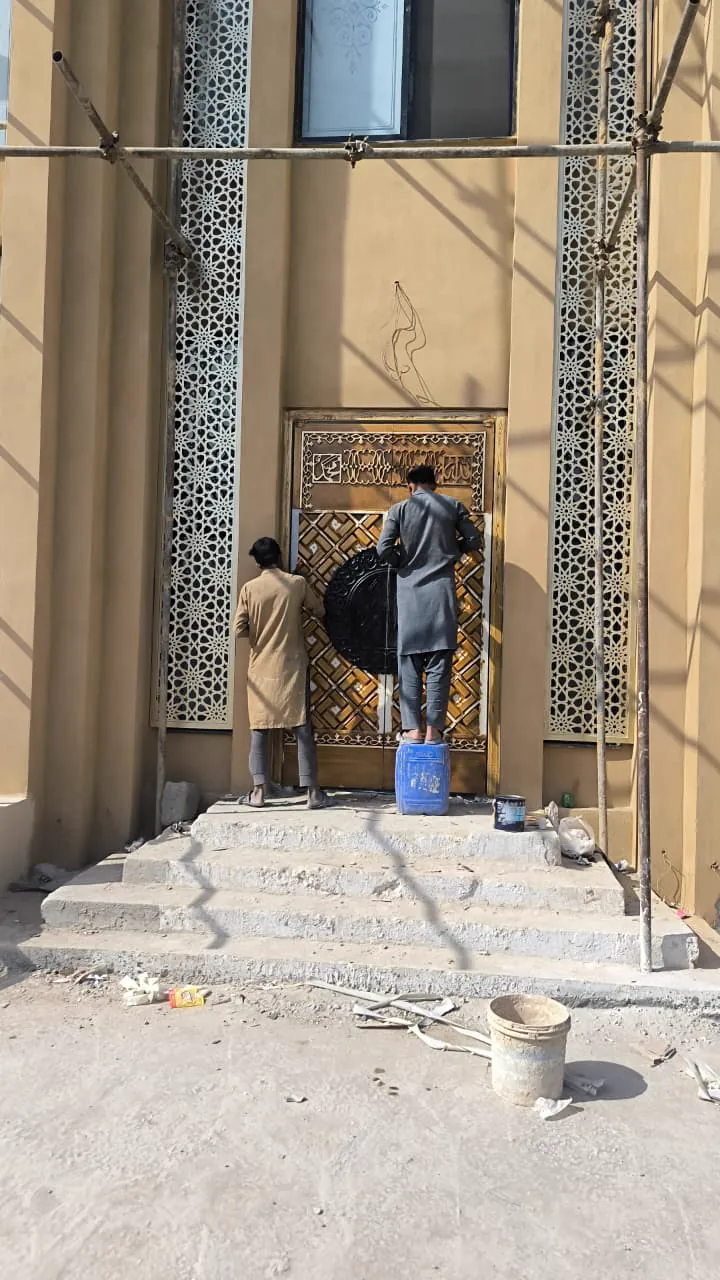
3. Installation on site
- Set out a grid on the facade from fixed reference lines
- Fix the sub-frame and check it for level and plumb
- Install panels from the bottom up, aligning the pattern across joints
- Seal, finish and protect until handover
See this work on our masjid, madrasa and commercial complex, or learn about our Islamic architecture service.