
Key takeaways
- A grey-structure contract covers the frame and shell; you manage finishing yourself.
- A turnkey contract covers everything up to handover under one price and one schedule.
- Whichever you choose, insist on an itemised BOQ and milestone payments.
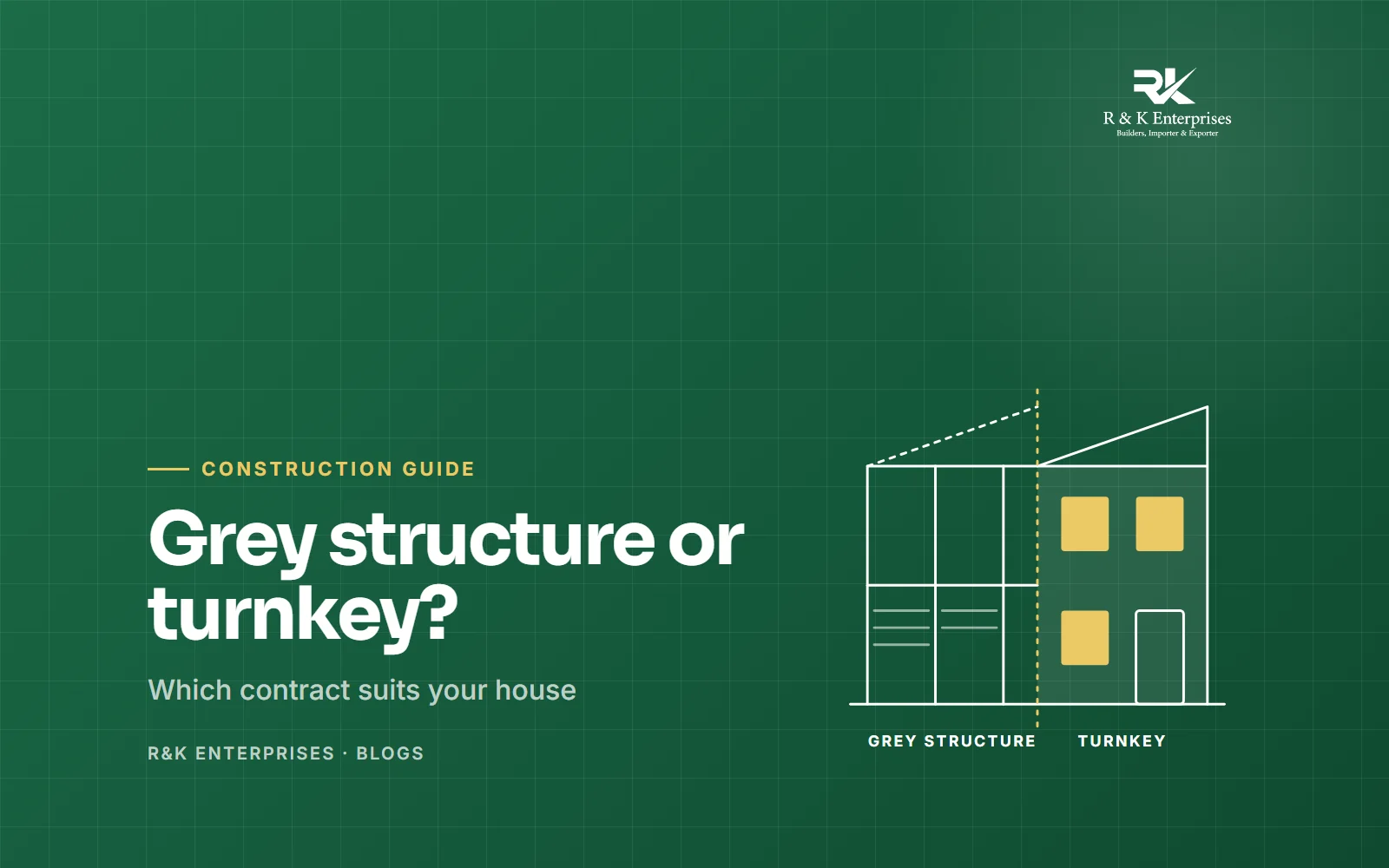
A grey-structure contract covers the foundations, frame, slabs, brickwork and basic services rough-in, leaving finishing to the owner. A turnkey contract covers the whole building, from excavation to handover, under one price and one schedule. The right choice depends on how much time you can give the project and how much risk you want to carry.
What a grey-structure contract includes
- Excavation, foundations and plinth
- RCC columns, beams and slabs
- Brick or block masonry
- Conduits and pipe sleeves for electrical and plumbing
- Roof waterproofing base
After that, the owner appoints separate teams for plaster, tiles, woodwork, paint, electrical fittings and sanitary work. This can save on margin, but it makes the owner responsible for coordination, quality checks and delays between trades.
What a turnkey contract includes
In a turnkey contract the builder delivers a finished house: structure, finishing, services, fixtures and a closed snag list. You approve materials and finishes up front, then pay against agreed milestones. See our construction service for how we structure these contracts.
| Grey structure | Turnkey | |
|---|---|---|
| Scope | Frame and shell | Whole building to handover |
| Who coordinates trades | Owner | Builder |
| Owner time needed | High | Low |
| Single point of responsibility | No | Yes |
How to choose
Choose grey structure if you have the time to manage finishing trades yourself and already know trusted craftsmen. Choose turnkey if you live abroad, work full-time, or simply want one team to answer to. Talk to us if you are unsure; we offer both.